Only articles in with the "Birmingham" tag are displayed

To display all articles click here.

Avatar Image

Birmingham Civic Dashboard: E-Government to We-Government via Open Data

6. October 2011 – 18:31 by John Heaven (TuTech Innovation GmbH)
Birmingham Civic Dashboard screenshot

Birmingham Civic Dashboard screenshot

In its recent consultation document ‘Making Open Data Real’, the UK Government expresses high hopes for open data, heralding it as possibly “the most powerful lever of 21st century public policy”. Following several years of open data advocacy, activism and hack days, in the UK open data is moving towards the mainstream thanks to unanimous backing from the coalition government and the opposition.

The latest move in open data comes from Birmingham City Council, which today launched its ‘Civic Dashboard’. This is a web site publishing raw customer services data along with a slick visualisation, which was made possible by a grant that Digital Birmingham received as a result of winning a competition run by the National Endowment for Science, Technology and the Arts (NESTA).

The Civic Dashboard draws its data from the customer service centre set up as part of the Council’s Business Transformation programme. An extract of data about all customer enquiries, whether by telephone, internet or email, is recorded by the customer relationship management system and fed into the Civic Dashboard in an aggregated (anonymised) form once per day. Where the data is geocoded, it can be presented on a map to show how many contacts originate from a particular ward or constituency. You can even see which channels the enquiries come through, which shows that the Council receives far more enquiries by telephone than through other channels.

This is an important step towards bridging the gap between eGovernment and ‘weGovernment’. Coming from the Council that was heavily criticised for spending £2.8m on its website as part of its eGovernment transformation, especially by Birmingham’s vocal social media users, opening up the data that is produced in the background shows what the new infrastructure can do beyond serving up static content. Doubtless there are many more datasets that exist as a result of the transformation programme, and if these are released in the future, perhaps Brummies will feel they got a better deal out of transformation than they first thought.

This itself is quite a paradox: such a handover of control to the citizen wouldn’t have happened if it weren’t for the huge transformation programme because IT is absolutely necessary for the collection of data in a reusable form.

Read the rest of this entry »


Avatar Image

UK riots and a new digital divide

9. August 2011 – 11:26 by John Heaven (TuTech Innovation GmbH)

Claims that social networking tools were used to co-ordinate the London riots, which have since spread to other cities including my former home town, Birmingham, point to a new digital divide: this divide is not about online and offline, but about a divide between the Twitterati, Facebook users and users of other platforms.

Following broad-brush claims that social networks have been used to co-ordinate the rioting and plundering, Twitter users have been quick to respond, pointing to Twitter campaigns to clean up the streets following the riots. They are right, but that isn’t the end of the matter.

It turns out that the riots were co-ordinated using Blackberry smart phones, which allow anonymous, encrypted, but social, communication. Blackberries? I tend to associate Blackberries with conservative business users but I was surprised to read a BBC article last week reporting that teenagers who own smart phones prefer them. While it may seem logical that they choose Blackberry devices because of the privacy and anonymity they offer, the article suggests that privacy is more of concern to older users.

Previous concerns about the digital divide seem a little simplistic now. Previously we thought in terms of a divide between online and offline, seeing the ultimate goal as getting the “final third” online. Doubters were confronted with research that deprived youngsters, especially from ethnic minorities, were more often online than one might expect. The logical conclusion was that public services need to engage more with the online generation, usually in the form of YouTube, Twitter and Facebook. Now we find that there is a whole generation we risk ignoring because of assumptions about which social media tools they use.

When I worked for Birmingham City Council, I spent some time on a project to help heal the wounds of the riots in Lozells and Handsworth in 2005. Then, the lessons learned were that false information spread by pirate radio stations inflamed the situation, reinforcing tensions between ethnic and religious groups. Encouragingly, yesterday there was a report of Sikhs and Muslims from the area standing together to fend off the looters.

Just as things are moving on there, communication habits have moved on too. Back then, pirate radio was a blind spot and monitoring established radio stations simply couldn’t give any tip-offs about the violence. Now, the blind spot is Blackberry devices and presumably a whole host of other communication channels.

So do local authorities need to start opening channels with young Blackberry users, as a Guardian journalist has done? I think in some cases they will have to, but will also have a difficult job in keeping a keen eye on the latest trends in communication.

It looks like digital just divided again.

http://www.guardian.co.uk/uk/blog/2011/aug/08/london-riots-blackberry-messenger


Avatar Image

The Virtual Library of Birmingham

21. July 2011 – 17:45 by John Heaven (TuTech Innovation GmbH)
Picture of me in Second Life

Me, posing in Second Life

This morning I went for a walk in a place on the other side of the channel which doesn’t exist yet. All without leaving my desk. Thanks to Birmingham’s Second Life model of the Library of Birmingham, the real life version of which is due to be opened in 2013, I was able to have a look at what they’re planning.

A couple of months back I blogged about Birmingham’s virtual model of the Library of Birmingham, then in the later stages of development. Earlier this month the Virtual Library went live, meaning that people from Birmingham (and beyond) can see a virtual model of the library that is scheduled to open in 2013 and let the developers know what they think.

As a Brummie, I recognised Centenary Square, and it was clear where the new library will be located and easy enough to get in (although Second Life can take a bit of getting used to before you start walking like you’re sober). Almost all areas of the library are accessible, and you can even choose whether to take the escalators or teleport to the different floors. It gives a good feel of how the library will eventually look and I noticed that some people had already commented on the building: one visitor was  “concerned about the floor — it might do your head in!” and someone advised “Make sure the tables are able to be used by disabled people and children.”

As I mentioned in my previous article, the Virtual Library launch is being accompanied by a range of activities to ensure that it doesn’t go unnoticed in Second Life. Regular workshops are being held at the current library for the public, who are then able to use the computers at the library to access Second Life or go home and try it themselves. Those who don’t fancy signing up for Second Life can either view fly-through videos of the library or submit their comments using questionnaires.

For more information about the launch of the Virtual Library, you see the press releases from Birmingham City Council and from Daden, the company that created the model. I’m going to get an update from library staff after their current phase of outreach work, so watch this space!

Can you spot me?

Can you spot me?


Avatar Image

Second Life for eParticipation? An exclusive sneak preview of Birmingham’s Virtual Library

16. November 2010 – 12:00 by John Heaven (TuTech Innovation GmbH)

lob_006_small

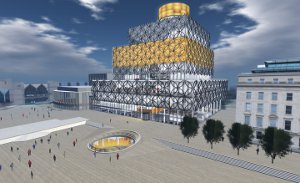
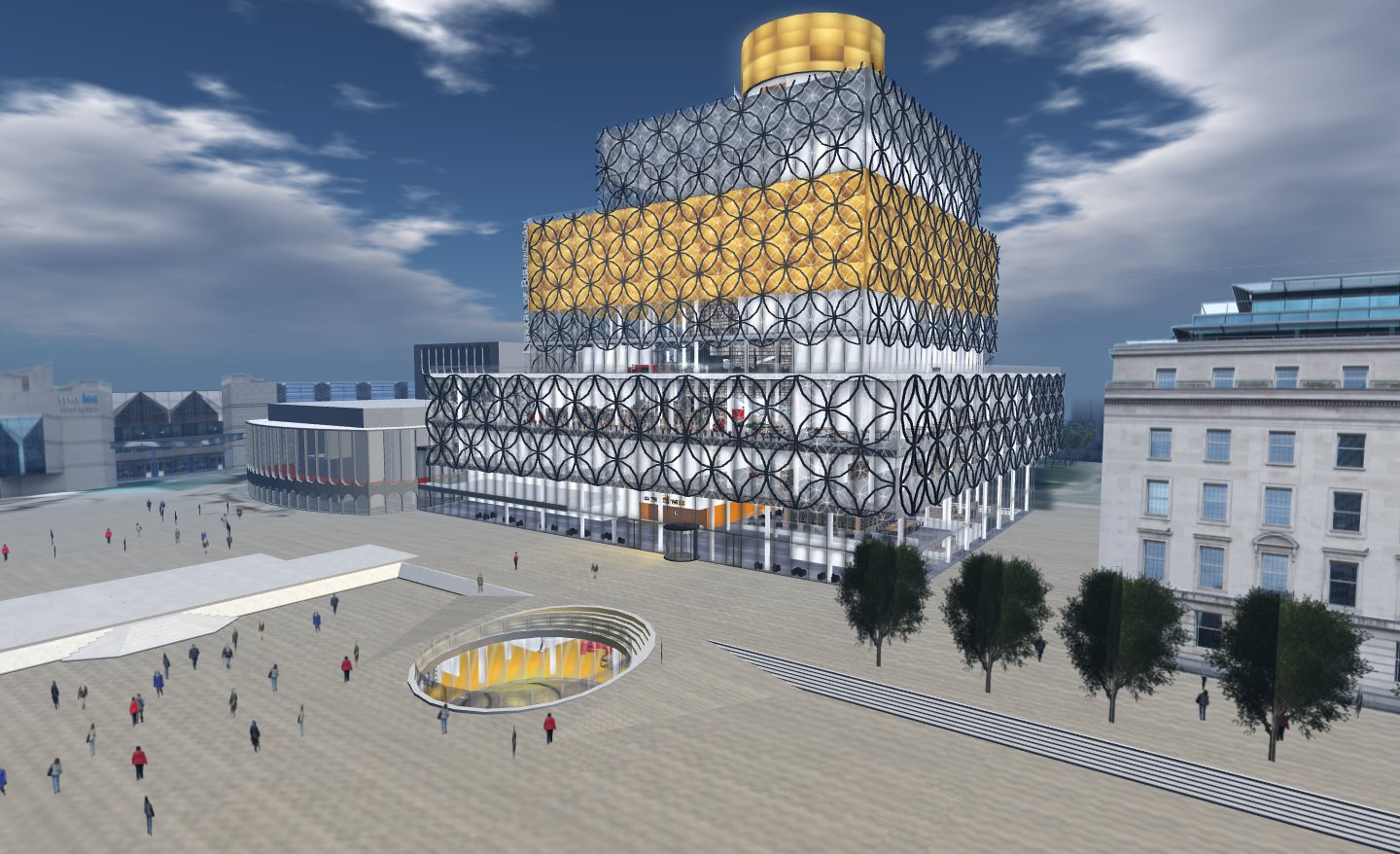
Birmingham's Virtual Library. Click for larger image

It’s easy to reject Second Life as an eParticipation platform, but Birmingham City Council is just about to launch a virtual model of the planned £193m Library of Birmingham. I spoke to representatives of the Council and the company that they are working with to find out what they are doing, and how they are making the virtual library accessible to a wide audience. What I found was fascinating, and I really think Second Life deserves a second look.

Second Life is a virtual world that allows users to assume a second identity and explore a digital three-dimensional world. It’s not difficult to see how this could be used to enable people to “go” to places they wouldn’t otherwise visit, network with people from far away, or take part in virtual events. That’s the theory; but my big issue with Second Life is that it is a very niche audience and it takes quite a lot of effort to download the software and work out how to use it. Once you’re in there, it’s great to be able to look at these virtual buildings and access information; but I can view videos, read text, and chat to friends much more easily using the internet outside Second Life. So why would a city council be interested in Second Life? Read the rest of this entry »


Avatar Image

“The internet is changing society and public administrations need to adapt”: Interview with Nick Booth

14. April 2010 – 22:57 by John Heaven (TuTech Innovation GmbH)
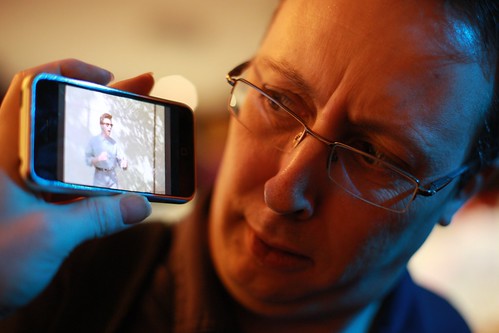
Nick Booth, by aeioux on Flickr.com

Photo of Nick Booth by aeioux on Flickr.com

Before becoming a social-media consultant and founding Birmingham-based Podnosh, Nick Booth was a BBC journalist and then ran a government quango. He advises public administrations on using social media, is involved in many projects that promote active citizenship, and is a major player on the UK’s eParticipation scene. Nick is regularly invited to speak at conferences on social media.

JH: Hi Nick. Thanks for taking the time to be interviewed for PEP-NET. First question: what does eParticipation mean to you?

Read the rest of this entry »


Avatar Image

eParticipation in Birmingham, UK

3. March 2010 – 13:38 by John Heaven (TuTech Innovation GmbH)

My name is John Heaven and I started work at TuTech Innovation on 1st March 2010. I will be working on – amongst other things – PEP-NET. Part of my role will be to work together with Bengt Feil on establishing what members would like to get out of PEP-NET membership, how we can improve what we offer to them, and ultimately ensure that PEP-NET can support itself into the future.

But before I set about that, I thought maybe you’d like to hear about where I’m from and what I’ve been doing until now, especially around eParticipation!

Read the rest of this entry »