Archive for the ‘experince’ Category
 |
10. October 2012 – 11:52 by nadine
|
From November 3rd till 6th, ePART took place in Kristiansand, Norway. It has been the 4th research conference of this kind which takes place as a separate track within the EGOV research conference. The EGOV conferences are organized by the IFIP Working Group 8.5 and in 2012 the 11th conference took place.
ePART is a place where people exchange latest research results, network, foster and establish cooperation between researchers and practitioners from the field of e-participation, and identify future trends.
ePART is a rather small research conference, in total the city of Kristiansand and the University of Agder welcomed around 100 participants including speakers and moderators.
Within the project, youthpart will be able to pile up some insights regarding relevant questions about youth & e-participation and young people’s participation in the digital society. These findings but also technical innovations may be interesting for a forum such as ePART as well.
Among the 18 research presentations, 2 key notes and 2 workshops, the following four projects attracted youthpart’s attention:
- Getting Teenagers to participate: a case study from the city of Lausanne
- Choosing the Right Medium for Municipal eParticipation
- Online Communities Support Policy-Making: The need for Data Analysis
- Public Policy Formulation through Non Moderated Crowdsourcing in Social Media
Getting Teenagers to participate: a case study from the city of Lausanne
Getting Teenager to participate – that was the focus of the scientific analysis presented by a representative of the University of Lausanne. The task proofed to be challenging: the city of Lausanne decided to establish a youth council and in order to attract applications for it, the decision was made for a two folded campaign, using online (e.g. facebook, youtube) and offline media (e.g. posters). For the design and implementation a media agency was contracted. The (failed) campaign was evaluated by the University of Lausanne and the Graduate School of Public Administration and showed how difficult it is in fact to motivate young people to participate in political engagement beyond organized structures. Yet, some interesting findings from the motivated youngster who handed in an application suggest that various factors contribute to becoming active as a young person, such as idealism to improve the world, political discussions with parents or active members of the family who serve as example, previous (voluntary) experiences.
Choosing the Right Medium for Municipal eParticipation
Researchers from the University of Agder put the relationship between media preferences, the need for information and local participation in the centre of their research. They chose an 8,000 inhabitant village and first identified the different target groups (e.g. business, youth, immigrants, seniors) and asked them about their media preferences and information need. According to the data, young people voice a need for general information, local information, individual information, and in addition are interested in a service dialogue as well as a service to report infrastructure problems. For all these information needs, the figures show that internet based communication services are in the lead, especially websites and email. Social media services unfold their strengths when it comes to the specific information need “forum for discussion” and “dialog among business” whereas mobile media peak when it comes to reporting infrastructure problems.
Online Communities Support Policy-Making: The need for Data Analysis
Using swarm intelligence to support policy making still has its perils when it comes to text-based online discussions: finding the key arguments and their benchmark within a reasonable time span proofs to be difficult. There is a need for data analysis based on a technical approach says a representative of the Fraunhofer Institute. The software presented manages to analyse long thematic threads according to different criteria: words are clustered based on their frequency and the user just needs to define the name of that specific cluster then. Additionally, the tendency of clustered text can be displayed which allows to identify positive and negative arguments and their strength. One important aspect is the setting of the discussion meaning that users know about the purpose of the online-platform, the topic, relevant questions and who set it up; that only allows users to make conscious contributions.
Public Policy Formulation through Non Moderated Crowdsourcing in Social Media
The presentation of a European research project lead to some controversial discussion among the audience: the consortium presented the idea to develop crawler software that searches social media, collect postings, analyse them and offer them to support policy making. The consortium calls it non-moderated crowdsourcing in social media, while the audience is reminded about surveillance mechanisms. Representatives of the project argue that social media are public sources of information, similar to online newspapers, and therefore could be used easily for policy making purposes. A listener from the audience refers to ministries who use exactly the same argument to watch online activities of their citizens, for surveillance purposes. The discussion showed that this project works at the brim of the notion of e-participation.
ePART and EGOV conferences benefit from their international audience; not only through the contribution of European participants, but to a great extant through participants from around the globe, such as Mexico, Indonesia, the United States of America, Brasilia, Cameroon, India and South Korea. ePART’s fifth edition will take place from September 16-19, 2013 in Koblenz, Germany, jointly with the 12th EGOV conference.
For more information about the conferences browse https://www.epart-conference.org/
Posted in Events, experince | No Comments »
 |
19. June 2011 – 12:28 by Francesco Molinari
|
In the aftermath of the three consecutive election rounds held between mid-May and mid-June this year – two administrative ballots and a referendum day – which have been unanimously seen as a defeat for the ruling center-right majority and particularly for the Prime Minister Mr. Silvio Berlusconi, many political commentators have strongly made the point that social networks (particularly Facebook, Twitter and YouTube) played a major role in determining the new prevailing orientation of Italian voters.
To be honest, the argument is not new. Already in the 2006 general election, a survey of electoral flows showed that the citizens embedded in homogeneous partisan networks were comparatively more influenced than those who discussed politics within heterogeneous networks that do not uniformly support a single political position. In both cases, the effects of interpersonal networks on voting behavior turned out to be stronger than those of TV news programs and generalist talk shows.
However, the big difference this time – particularly in the case of the referendum, since the administrative ballots were involving only part of the Italian population, though also including important cities like Milan, Turin, Bologna and Naples – is that almost all nationwide TV channels did not provide any coverage of the election day till the very last week of campaign. Critics attributed this lack of transparency to the fact that 5 out of 7 channels (three private and two public) are controlled by the media tycoon and elected PM Silvio Berlusconi, and that the referendum was putting into question the building blocks of his government’s policy stance: from privatization of a public service like tap water supply to the rebuilding of nuclear power plants in Italy, not to forget the controversial law that had suspended de facto the numerous ongoing trial hearings of the Prime Minister till the end of his mandate.
Knowing that the majority of voters would have repelled these acts – the argument continues – the Government’s unspoken strategy was aimed to prevent the 50,001% quorum (percentage of population going to the polls) that is required to make a referendum’s results effective, according to the Italian Constitution, differently from any normal election. Parts of that strategy were reportedly: the decision taken by the Ministry of Interior to postpone the referendum day till the beginning of school holidays in Italy, the slow start-up of the usual TV video clips instructing citizens how to vote as well as of the electoral talk shows in the national TV channels (a delay that was formally blamed by the National Telecommunication Authority), and other hilarious happenings like TV news speakers making mistakes on the actual election date, or fake weather forecasts announcing the sunshine and inviting people to go off on leisure trips… The same appeal, by the way, which was indirectly made to the electorate by key members of the incumbent majority.
Thus, while the impact of television on voting was being sterilized somehow, Italy registered an explosion of political discussions and particularly word of mouth spreading on social networks, with hundreds of Facebook groups created ad hoc and Twitter messages sent around to promote participation of friends and relatives in the referendum day (the assumption being that once reached the quorum, there would be no doubt on the results; in fact, the “aye’s” to abrogation ultimately won 95-5). Statistics available from Google Insights clearly show how the public’s interest on making web searches on the word “referendum” was steadily growing in the two weeks before. Here again, some humorous peaks were reached: for instance, Madonna’s latest hit being forced to change from “Vogue” to “Vote!“, or the TV information service for the hearing impaired becoming a pretext for mockery of Government censorship on how to vote.
Most of these video clips have relied on YouTube and other similar repositories to support viral distribution to peers and reach the top headlines of printed – as well as Internet – press. Yet, it remains fairly undemonstrated that a decisive push to voters orientation has been a direct consequence of this exposure. For instance, according to an instant poll realized by IPR Marketing on the aftermath of referendum day, 81% of former Berlusconi’s party voters and 64% of “Terzo Polo” (the main center opposition party) did actually stay at home on the referendum day, compared with 10% of left party supporters and a surprising 49% of the Northern League followers (the biggest ally in the Prime Minister’s coalition).
To conclude, while the political effects of social networks seem to have been enhanced by a partisan, purposeful reaction to a Government’s instrumental exploitation of traditional media and particularly TV, real impact seems to have more likely occurred within the center-left opinion area – by the way, the 2006 general election also saw the victory of a leftist majority, and part of the Northern League’s electorate is said to be made of former center-left voters – while the persistent power of television on electoral behavior is not decisively disconfirmed. Further research is needed to assess whether this election round marked a real breakthrough in the Italian politics or is simply another step of the long march towards wider engagement of “ordinary” people in the electronic participation arena.
Posted in experince, Trends | 1 Comment »
 |
10. September 2010 – 15:37 by POLITECH
|
It’s not surprising that any kind of a project has a set of risks that can impair the project’s results. eParticipation projects can be especially exposed to a number of various risks, ranging from poor platform developments, which don’t meet users’ requirements and preferences, to inadequate communication strategies.
Therefore, developing a risk management plan in the early stage of a project is crucial. It allows to identify certain risks, to analyse them and to develop early strategies and solutions that will help in either minimizing their impact on a project or completely avoiding them.
However, the identification of risks at the beginning of a project is not enough, because additional risks might arise during the duration of the project or the proposed solutions and strategies to overcome them might prove to be ineffective. Thus, a continuous tracking and control of such risks is very much desirable. In this respect, the Continuous Risk Management (CRM) paradigm developed by the Software Engineering Institute (SEI) of Carnegie Mellon University (https://www.sei.cmu.edu/risk) can be a valuable strategy. It doesn’t only allow for continuous risk identification and management, but it also helps in assessing risk exposure by combining the impact and probability of the risk.
Posted in experince | No Comments »
 |
8. September 2010 – 22:40 by Institute for Electronic Participation
|
 According to the latest UN E-Participation Index measurement, the majority of South Eastern European countries improved their global standing regarding the quality and usefulness of information and services for the purpose of engaging its citizens in public policy making through the use of e-government programs. Nevertheless, e-participation in SEE countries is still falling behind their e-government developments. An overview of current e-participation situation in SEE within government domain will be presented, highlighting key elements needed for strengthening e-democracy in the region. One of them will be focused on non-governmental organizations and civil society e-participation experience (e.g. on-line Citizen’s forum) needed for shaping inclusive and citizens oriented e-government policy.
Link to video lecture: https://videolectures.net/forum2010_delakorda_meis/
Link to presentation: https://www.inepa.si/images/stories/mapping_edemocracy_see_region_delakorda.pdf.
Lecture presented by Simon Delakorda, M. Sc., executive director, Institute for Electronic Participation (INePA) and member of the Central and Eastern Citizens Network eParticipation expert group.

Posted in Events, experince, good practice, ICT, members, News, Projects, Tools, Trends | No Comments »
|
|
6. August 2010 – 17:28 by Institute for Electronic Participation
|
E-participation & E-democracy workshop was organized as a part of the Citizens Participation University 2010 which took place from 20th to 24th of July in the Civil College in Kunszentmiklós-Kunbábony (Hungary).
10 NGOs representatives and activists from Armenia, Belgium, Hungary, Slovakia, Slovenia, Serbia, Poland and Romania attended the workshop.
Participants were introduced with E-participation / E-democracy concept, political documents of the Council of Europe relating to eDemocracy, current e-participation developments in Central and Eastern Europe and different e-participation tools as well as good practices. The second part of the workshop facilitated open discussion about opportunities for involving e-participation tools into current and future civil society projects in the region.
The workshop was lead by Mr. Csaba Madarász (e-democracy expert and consultant, Hungary) and Mr. Simon Delakorda, M.Sc. (Institute for Electronic Participation, Slovenia)
Citizens Participation University 2010 was organized by the Civil College Foundation and Central and Eastern European Citizens Network (CEE CN).
Csaba Madarász and Simon Delakorda
Workshop presentations:
1. eParticipation in the CEE: NGO’s perspective (pdf, 4,10 mb).

Citizens Participation University 2010 participants @ CEE CN

Simon Delakorda and Csaba Madarász @ CEE CN
Posted in Events, experince, good practice, ICT, members, Tools, Trends | No Comments »
|
|
12. July 2010 – 16:33 by POLITECH
|
 On April 22, during the Earth Day 2010, the WAVE Consortium proceeded to the official launch of the second phase: the objective today is to reach 6,000 users over Europe. The first phase gathered more than 300 users in the pilot countries: France, Lithuania and England.
The ultimate goal for all the partners is to create a community of users and debaters in charge of testing online the WAVE platform and its innovating tool: Debategraph. This forum will use ground breaking graphical techniques to enable everyone, regardless of their level of knowledge, to exchange views and debate on complex climate change issues.
The WAVE Project will end in January 2011, after which the European Commission will decide whether this tool is efficient among others and if it should be used more intensively.
Climate change is one of the most challenging and most serious phenomenons which we must face today. Therefore citizens, special interest groups and decision-makers are invited to mobilize and subscribe, free of charge, to the following websites:
French Pilot Site (https://www.debatclimat.eu)
UK Pilot Site (https://www.jointhewave.org)
Lithuanian Pilot Site (https://www.wave-diskusijos.lt)
WAVE EU Site (https://www.wavedebate.eu)
Posted in experince, Projects, Tools | No Comments »
 |
9. July 2010 – 16:11 by Dorothee Ruetschle (TuTech Innovation GmbH)
|

Photo by fRandi-Shooters on Flickr.com
Europas Netzwerk für ePartizipation PEP-NET – Pan European eParticipation Network – lädt am 23. September 2010 in die historische Speicherstadt der Freien und Hansestadt Hamburg ein. Im Mittelpunkt der von Richard Wilson, dem Begründer von Involve and izwe, moderierten eintägigen Veranstaltung steht das Thema Online-Bürgerbeteiligung – ePartizipation.
Beleuchtet werden insbesondere die Facetten
– ePartizipation in Europa: strategische Ziele vs. Umsetzung
– Die Zukunft der ePartizipation: regional, national und international
– Vorzeigeprojekte der ePartizipation: Berichte aus dem Praxisfeld
Die internationale Tagung ist für die Bedürfnisse von Vertretern aus Verwaltung, Wissenschaft, Wirtschaft und Bürgerorganisationen konzeptioniert. Gerade in Zeiten knapper Kassen stehen verschiedene Ausprägungen der ePartizipation, wie Bürgerhaushalte, die Beteiligung der Bürger an Gesetzgebungsverfahren, Open Data, Bürgerbeteiligung in der Politikfeldgestaltung, cooperative government und Transparenz bei Kommunen, Ländern und Nationen auf der Agenda. PEP-NET widmet sich der Förderung der ePartizipation und schafft mit der Veranstaltung eine besondere Plattform für einen intensiven Austausch, weiterführende Diskussionen und anregende Gespräche mit hochrangigen Persönlichkeiten.
PEP-NET freut sich besonders, die Teilnahme beitragsfrei anbieten zu können. Eine Anmeldung für die limitierte Veranstaltung ist ab sofort über die Online-Registrierung unter https://pep-net.eu/pep-net-summit/ möglich.
Der offizielle Hashtag für die Veranstaltung ist #PEPSUM
Posted in experince, good practice, open data, Projects, TuTech, Uncategorized, Visions | No Comments »
 |
17. June 2010 – 15:19 by Centre for E-Government
|
 Extended Call For Papers – eJournal of eDemocracy and Open Government (JeDEM)
Issue 3/ September 2010
Special Issue in Collaboration with
PEP-NET: Sustainable eParticipation
Guest Editors
- Rolf Luehrs (PEP-NET, TuTech Innovation GmbH, D)
- Francesco Molinari (SmartIntuitions Ltd., CY)
The eJournal of eDemocracy and Open Government addresses the theory and practice in the areas of eDemocracy and Open Government as well as eGovernment, eParticipation, eDeliberation and eSociety. The aim is to impact the quality, visibility, efficiency and use of research and work in eDemocracy, Open Government and related fields.
Call for Papers
The past decade has seen a significant increase in the number, variety and quality of eParticipation trials, particularly in Western and Southern European countries. The impulse of the European Parliament and the financial support by the Commission have been instrumental in establishing a pan-European community of practice, made up of academia, governments and solution providers from virtually all EU Member States.
Read the rest of this entry »
Posted in experince, good practice, ICT, News, open data | No Comments »
 |
15. June 2010 – 10:13 by E-Voting.CC
|
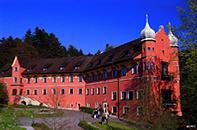 Our “EVOTE” Conferences have become an international meeting point for e-voting experts worldwide. This year’s “EVOTE2010″ will be the fourth of it’s kind.
Today, June 15, the reduced early registration fee ends! (300€ including social events)
From June 16 the price will be 360€.
In order to get the discounted fee, register online today!
The 4. International Conference on Electronic Voting will be held from July 21 to 24 of 2010 in Bregenz, Austria. Please have a look at our internationally casted conference programme here.
We are looking forward to seeing you at the conference in July – so register now!
Daniel Botz – EVOTE2010 Conference Manager
Posted in Debate Europe, Events, experince, ICT, News, Projects, Uncategorized | No Comments »
 |
19. May 2010 – 09:16 by John Heaven (TuTech Innovation GmbH)
|

Photo of Robert Krimmer
When Britons went to vote in the General Election on 6th May, some of them were locked out of the polling booths and were not able to cast their votes. An article on the PublicTechnology website suggested that eVoting could be the answer to this problem, and should be given another chance.
I spoke to Robert Krimmer – Director and Founder of the Competence Center for Electronic Voting in Austria and a founding member of PEP-NET – to find out whether he agreed.
John Heaven: Hi Robert. What is E-Voting.cc, and what do you mean by eVoting?
Robert Krimmer: E-Voting.cc is an Austrian Non-Governmental Organisation (NGO) that fosters the development of eVoting. We deal with any type of eVoting – whether electronic machines in polling booths, internet voting, voting through cash machines, mobile phone voting. The important thing is that the act of casting a vote is done electronically.
JH: So does that include the punch-card system that is used in the United States?
RK: No, that is not included because the votes are counted electronically but not cast electronically. We use the Council of Europe’s definition of eVoting.
JH: You have heard about the problems that UK voters had last week: there were complaints about voters queuing for hours only to be turned away at 10pm. Could eVoting have solved this problem, as discussed in a recent PublicTechnology article?
Read the rest of this entry »
Posted in experince, Interview, members, Trends | No Comments »