|
Call for Authors: Beyond e-Government Measuring Performance: A Global Perspective12. January 2015 – 01:33 by Gov2U |
Archive for the ‘Uncategorized’ Category
 |
CeDEM13 Call Extended: New Deadline 5 February 201316. January 2013 – 10:28 by Rolf Luehrs |
Call Text from Noella Edelmann and Peter Parycek (Conference Chairs):
We kindly invite you to submit a paper to this year*s CeDEM – Conference for E-Democracy and Open Government. The conference will be held in Krems, Austria, 22-23 May 2013. The submission deadline has been extended to 5 February 2013.
In 2013, the CeDEM13 will focus on E-Democracy and Open Government in the context of human rights and freedom in a digital society and covers the following topics: E-Democracy, E Participation, Government 2.0, Social Media and Public Administration, E Politics and E Campaigning, European Citizen Initiative, Participatory Budgeting, Bottom Up Movements, Open Data, Open Innovation, Open Science and Open Access.
Keynotes at the CeDEM13 will include John Carlo Bertot from the University of Maryland, Karine Nahon from the University of Washington, Beth Noveck from the New York Law School and former United States Deputy Chief Technology Officer for Open Government, and Tiago Peixoto from the World Bank, Washington.
Conference website: www.donau-uni.ac.at/cedem
Submission site: www.cedem-conference.org/cedem13
Follow us on Facebook: https://tinyurl.com/CeDEMfacebook
 |
Date and time for PEP-NET Google+ Hangouts24. September 2012 – 16:41 by John Heaven (TuTech Innovation GmbH) |
Last week I suggested we arrange a Google+ Hangout to catch up with each other, especially as we have some new members. Well we had quite a lot of interest, so I decided to hold two hangouts.
I have already written to those whose email address I have, so anybody else please note the following two times:
Hangout I: 27/9 at 15.00
Hangout II: 28/9 at 11.00
All times are CET. Please add me to a Google+ circle so that I am able to find you quickly and can invite you to the hangout.
I look forward to catching up with you!
|
|
Conference: Internet & Participation10. August 2012 – 11:55 by Rolf Luehrs |
Date: Saturday, 1st of December 2012, 10am – 6pm
Topic:
The Internet was always connected to a vision of a participatory society. There is the idea that the new medium would produce politically better informed citizens and that that would lead to greater citizen participation. However, skeptics believe that the barriers between the individual and the political public sphere are not technical but social in nature and therefore cannot be repealed by online technologies. Today we are still somewhat between the highly technical deterministic and technical indifferent position. With the social web new opportunities developed and they are used by civil society organizations as well as by political parties and by governments and administrations – from e-petitions to adhocracy, from wikis to open data. What works? Who participates? How can people be mobilized online? What impact do the new online tools have on political communication, on political decision-making and on the political system itself. That is the subject of this conference. We will look at the political online participation from different perspectives, from the civil society side, bottomup, and from the sides of politics, top-down. The conference will not only focus on and discuss scientific results but will also try to build a bridge between science and practice in order to share knowledge and experience. Therefore scientists and representatives from civil society organizations, parties, administrations etc. are invited.
Conference language is German, translation cannot be provided.
|
|
Save the Date: the PEP-NET Summit 201214. February 2012 – 15:19 by John Heaven (TuTech Innovation GmbH) |
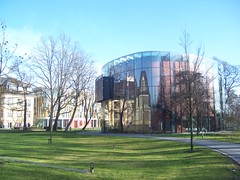
Photo by karikas on Flickr.com
The PEP-NET Summit 2012 will take place on 14th May 2012 at the Bucerius Law School in Hamburg. We are looking forward to an interactive event with plenty of space for networking and discussion. Anybody who is interested in eParticipation, at all levels of experience, is invitedto attend.
With an audience of European eparticipation enthusiasts, local engaged citizens, and representatives of the City of Hamburg, the PEP-NET Summit will again be a bustling marketplace of ideas and an opportunity for participants to catch up with each other and meet new people.
The first PEP-NET Summit took place on 23rd September 2010. We heard speeches from Cisco’s Paul Johnston, Andrea di Maio from Gartner, and Anke Domscheit-Berg amongst others. The summit was moderated by Richard Wilson and speakers from across Europe had the chance to present their projects and ideas in small, informal “presentation corners”.
Please block the date in your diary and register via amiando.com/pep-net. There is no entrance fee and places will be allocated on a first come, first served basis.
We look forward to welcoming you to Hamburg!
 |
International Joint Workshop on Immigrant Inclusion by e-Participation 2.-3.11.2011 (IJW11)5. October 2011 – 10:08 by irmatolonen |
Immigrant Inclusion by eParticipation (IIeP) –project is organizing an international joint workshop dealing with immigrants and cultural minorities and their e-participation processes on November 2-3 2011, Helsinki, Finland.
Target groups: Authorities in national and local level involved in e-democracy and e-governance, persons from immigrant and multicultural non-governmental organisations as well as researchers and others in related fields interested in e-democracy and inclusion of immigrants in participatory decision-making.
Aim of the International Joint Workshop: Creating a discussion forum and a dialogue between authorities, NGO actors and immigrant societies on immigrant inclusion by e-participation.
There will be cross-border exchange of best results as experienced in practice, in projects or in research. The sessions will all have participatory elements such as discussions, collaboration, brainstorms and debates and will utilize participatory tools and methods. E-participation will be also possible, the links will appear later.
The event is free of charge, but make sure you register by the 21st of October 2011, since the venue only has a limited amount of seats.
Keynote speakers, Presentations, Abstracts and Biographys
The keynote speakers and their preliminary topics are:
Nico Carpentier, Senior Lecturer in Communication and Media Studies, Department of Social Sciences, Loughborough University, UK
“Mediated participation. ‘New’ technologies’ claims to increased participation, novelty and uniqueness”
Edward Andersson, Deputy Director of Involve, UK, Expert on methods of participatory decision making
“Engaging for the long term -Successful strategies and examples”
|
|
UK riots and a new digital divide9. August 2011 – 11:26 by John Heaven (TuTech Innovation GmbH) |
Claims that social networking tools were used to co-ordinate the London riots, which have since spread to other cities including my former home town, Birmingham, point to a new digital divide: this divide is not about online and offline, but about a divide between the Twitterati, Facebook users and users of other platforms.
Following broad-brush claims that social networks have been used to co-ordinate the rioting and plundering, Twitter users have been quick to respond, pointing to Twitter campaigns to clean up the streets following the riots. They are right, but that isn’t the end of the matter.
It turns out that the riots were co-ordinated using Blackberry smart phones, which allow anonymous, encrypted, but social, communication. Blackberries? I tend to associate Blackberries with conservative business users but I was surprised to read a BBC article last week reporting that teenagers who own smart phones prefer them. While it may seem logical that they choose Blackberry devices because of the privacy and anonymity they offer, the article suggests that privacy is more of concern to older users.
Previous concerns about the digital divide seem a little simplistic now. Previously we thought in terms of a divide between online and offline, seeing the ultimate goal as getting the “final third” online. Doubters were confronted with research that deprived youngsters, especially from ethnic minorities, were more often online than one might expect. The logical conclusion was that public services need to engage more with the online generation, usually in the form of YouTube, Twitter and Facebook. Now we find that there is a whole generation we risk ignoring because of assumptions about which social media tools they use.
When I worked for Birmingham City Council, I spent some time on a project to help heal the wounds of the riots in Lozells and Handsworth in 2005. Then, the lessons learned were that false information spread by pirate radio stations inflamed the situation, reinforcing tensions between ethnic and religious groups. Encouragingly, yesterday there was a report of Sikhs and Muslims from the area standing together to fend off the looters.
Just as things are moving on there, communication habits have moved on too. Back then, pirate radio was a blind spot and monitoring established radio stations simply couldn’t give any tip-offs about the violence. Now, the blind spot is Blackberry devices and presumably a whole host of other communication channels.
So do local authorities need to start opening channels with young Blackberry users, as a Guardian journalist has done? I think in some cases they will have to, but will also have a difficult job in keeping a keen eye on the latest trends in communication.
It looks like digital just divided again.
|
|
There’s more to eParticipation than Facebook19. May 2011 – 16:57 by John Heaven (TuTech Innovation GmbH) |
Research at the University of Westminster has come to the preliminary conclusion that proprietary social networking tools (such as Facebook and Twitter) are not sufficient to mobilise political activists, but that a mixture of open-source and proprietary tools is necessary to address their particular needs. Drawbacks to proprietary solutions include security concerns and the absence of features that are tailored to activists’ requirements.
(See E-Government Bulletin article.)
The research applies to non-state actors, and thus cites Amnesty’s “Save The Human” website and an open-source platform called “Crabgrass”, both of which have functionality that is tailored to the needs of organising activists. But does this also have implications for government organisations such as local authorities?
I think it does, because there are types of political participation that are less often initiated by grass-roots activists but instead usually organised (or commissioned) by government. Examples include participatory budgeting, which often requires software that is specifically designed for the purpose, and online spatial planning such as our own DEMOS-Plan, which is specifically designed to replace paper-based processes by integrating interactive online maps and plans. A further advantage of working with bespoke software is that amendments can be made to reflect users’ wishes. Nevertheless, the research mentions the effectiveness of Facebook and similar social networks for publicity purposes.
So I think it’s a welcome reminder that government isn’t always reinventing the wheel if it commissions bespoke consultation software instead of using generic social networking tools, and of the role that social networks can play in encouraging political participation.
|
|
“Friends don’t let friends use IE 6″: ie6countdown.com11. March 2011 – 10:05 by John Heaven (TuTech Innovation GmbH) |

"IE6 Death Cake" by amberlrhea on Flickr
A campaign to put Microsoft’s decade-old web browser, Internet Explorer 6, out of its misery is nothing new. There has even been a petition on the UK Number 10 petitions website calling on government to upgrade to a modern browser, which was rejected, and Google dropped IE6 support for its apps more than a year ago.
The novel thing about ie6countdown.com is that the organisation behind it is, er, Microsoft. Needless to say, they call upon users to upgrade to Internet Explorer 8 and don’t mention the other browsers out there (such as Firefox, Chrome, Safari and Opera). Anticipating probably the main argument for retaining IE6, they dedicate a part of the website to corporate users.
Developers have long complained that adding support for IE6 adds complication and cost to the process of creating websites that government employees can use. From a government employee’s perspective, IE6 is just another barrier to engaging with the outside world through the internet on top of restrictions on social media access and third-party software such as Skype. 3.5% of UK users are still hooked on IE6, as are 2.9% of German users, and 3.3% of Italian surfers. Finland and Norway lead the way with 0.9% and 0.7% respectively.
So, will this add to the pressure on governmental organisations to make the switch?
|
|
Walsall illuminates its citizens using Twitter3. March 2011 – 11:02 by John Heaven (TuTech Innovation GmbH) |

Photo by Techie Kev on Flickr.com
As reported in the Guardian, Walsall City Council is conducting a 24 hour experiment to publicise what it does. Starting at 6.00 UK time today, four Twitter streams will be pumping out updates from nuisance neighbour reports to pest control.
The Twitter accounts @walsall24_1 to @walsall24_6 have been reserved, although at the time of writing only two seem to be tweeting — presumably the rest have been reserved to prevent spoofers setting up bogus accounts (which, to my juvenile mind, seems a bit of a shame).
The experiment follows a similar campaign by Manchester Police, who tweeted over a 24 hour period recently.
For more information, see the Walsall City Council website: https://www.walsall.gov.uk/walsall24.htm.
PS: There’s a free candy floss and a goldfish if you understood the pun in the title.